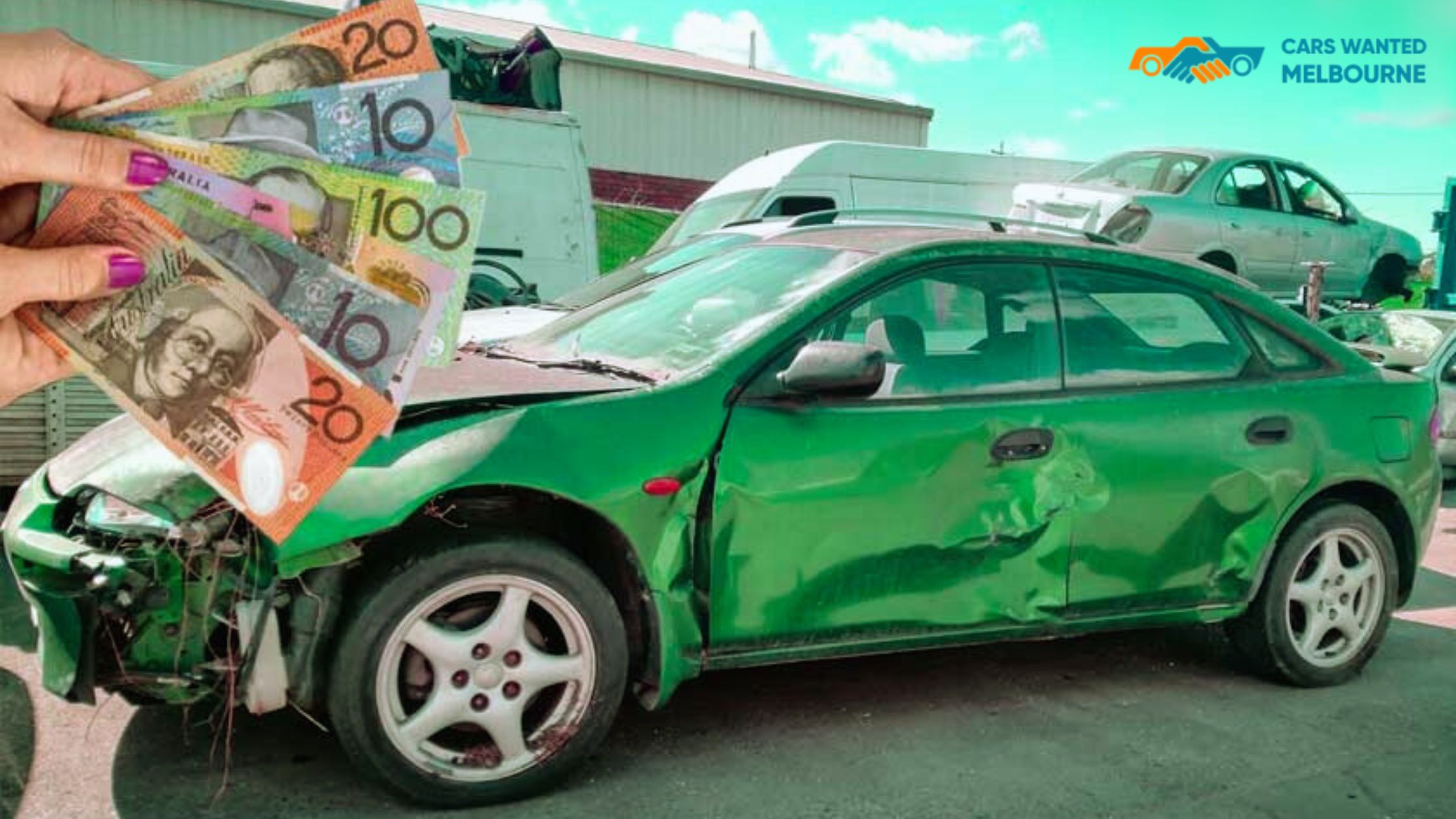
If you have an accident-damaged, mechanically faulty, unwanted or non-running vehicle in Melbourne, you may assume that selling it will be difficult or that it has little value. In reality, a damaged vehicle can still have value through its remaining usable components, salvage potential and recyclable materials.
However, there are plenty of misconceptions about selling damaged cars for cash.
Below, we separate common myths from the practical facts so Melbourne vehicle owners can understand what can affect the value of a damaged car, how the removal process works and what to check before accepting an offer.
Fact: A damaged car can still have value.
A vehicle does not necessarily become worthless because it has been involved in an accident or developed a major mechanical fault.
Depending on its condition, value may come from:
The make, model, age, condition and extent of damage can all influence the amount a buyer may offer.
For example, a vehicle with significant body damage may still contain a functioning engine, transmission or other components that have value.
This is why it can be worthwhile getting a vehicle assessed before deciding that repairing or selling it is not financially practical.
Fact: You can request a quote based on the car’s current condition.
One of the biggest mistakes vehicle owners make is assuming they need to repair an accident-damaged or mechanically faulty vehicle before approaching a buyer.
Major repairs can be expensive.
If your vehicle has a failed engine, damaged transmission, accident damage or another significant fault, the cost of repairing it may not make sense compared with its current market value.
Instead of automatically spending money on repairs, you can find out what the vehicle may be worth in its present condition.
When requesting a quote, explain the damage honestly. Providing details about the vehicle’s condition helps the buyer assess the car more accurately.
Fact: Non-running cars can still be purchased for salvage, parts or recycling.
A vehicle does not always need to be roadworthy or operational to have value.
Cash-for-damaged-car services may consider vehicles with:
If the vehicle cannot be driven, tell the buyer before arranging collection.
This allows the appropriate towing or loading equipment to be arranged.
Fact: The type and status of a written-off vehicle matter.
In Victoria, written-off vehicles are recorded on the Written-Off Vehicles Register (WOVR). Transport Victoria identifies different categories, including repairable write-offs and statutory write-offs.
A statutory write-off is treated differently from a repairable write-off. According to VicRoads, a statutory write-off is too badly damaged for repair and cannot be registered again in Australia, although its parts can still be used in appropriate circumstances.
A repairable write-off can have different requirements. A vehicle may potentially be registered again after meeting the relevant inspection and certification requirements. Transport Victoria states that registering a repairable written-off vehicle requires a certificate of roadworthiness and a Victorian Vehicle Identity Validation certificate.
Therefore, if your vehicle has been written off, its status should be understood before deciding what to do with it.
Fact: Every vehicle needs to be assessed individually.
There is no universal price for damaged cars.
Two vehicles with similar damaged car removal in Melbourne can have very different values because of differences in:
A damaged vehicle with a desirable engine or valuable parts may receive a different offer from an older vehicle with extensive damage and missing components.
This is why an individual vehicle assessment is more useful than relying on a generic advertised price.
Fact: Mechanical and internal problems can also affect a vehicle’s value.
Not all vehicle damage is immediately visible.
A car can appear reasonably clean externally while having serious problems with:
If your vehicle has a mechanical fault, tell the buyer about it when requesting a quote.
A transparent description of the vehicle helps avoid misunderstandings and allows the vehicle to be assessed according to its actual condition.
Fact: Private advertising is only one option.
Selling cars for cash in Melbourne privately can involve:
A dedicated damaged-car buying and removal service provides another option.
You can provide the vehicle details, receive an assessment and, if you accept the offer, arrange collection.
This can be particularly useful for owners who have a non-running vehicle or do not want to spend time finding a private buyer.
Fact: Vehicle removal and vehicle value are separate parts of the transaction.
If a company offers free car removal, that does not automatically mean the vehicle has no value.
Vehicle removal is the logistics side of the service. The vehicle itself may still have value based on its parts, salvage potential or recyclable materials.
However, always confirm what “free removal” means before agreeing to a transaction.
Ask whether:
Clear terms help prevent misunderstandings.
Fact: Comparing the complete offer can help you make an informed decision.
The highest advertised amount is not necessarily the amount you will receive for your particular vehicle.
When comparing offers, look beyond the headline figure.
Check:
An offer that appears higher initially may not provide better value if significant charges are deducted later.
If you are looking for cash for damaged cars in Melbourne, understanding the valuation process can help you set realistic expectations.
Some vehicles have stronger demand for replacement components than others.
Older vehicles may have lower resale value, but their parts and recyclable materials can still contribute to their overall value.
A vehicle with moderate accident damage may be valued differently from one with severe structural or mechanical damage.
Working major components can contribute to a vehicle’s salvage value.
Parts that can be removed and reused may influence the overall assessment.
A vehicle’s registration and written-off status can affect what can be done with it and how it is valued.
Metal and other recoverable materials can contribute to the value of an end-of-life vehicle.
Yes, you can enquire about selling an accident-damaged vehicle in Melbourne.
The vehicle does not necessarily need to be in driving condition.
Common examples include cars affected by:
When requesting a quote, provide an accurate description of the damage.
If possible, photographs can also help the buyer understand the vehicle’s condition before collection.
Yes, a car with a failed engine or transmission can still have potential value.
The vehicle may contain other usable components even if one of its major mechanical systems has failed.
Instead of automatically paying for a major repair, compare the repair cost with the potential value of selling the vehicle in its current condition.
The answer depends on the type and status of the written-off vehicle.
Victoria’s Written-Off Vehicles Register records written-off vehicles and distinguishes between categories such as repairable and statutory write-offs.
If you are unsure about your vehicle’s status, check the relevant Victorian records and obtain appropriate advice before selling or disposing of the vehicle.
A statutory write-off cannot be registered again in Australia and is generally limited to parts or recycling.
The exact requirements depend on the vehicle and circumstances of the sale.
For a Victorian registered vehicle, VicRoads states that sellers need to notify VicRoads of the sale within 14 days and complete the relevant notice of disposal with the buyer’s details.
If you are disposing of a vehicle rather than transferring it to another owner, VicRoads provides separate guidance covering cancellation of registration and safe disposal.
It is sensible to keep records of the transaction, including the buyer’s details and any relevant sale documentation.
Before handing over your vehicle, check the car carefully for personal belongings.
Remember to check:
You should also remove personal documents, toll tags and other items that you do not want to leave with the vehicle.
There is no guaranteed amount for a damaged vehicle, but you can make the assessment process easier by providing accurate information.
Provide the make, model, year and registration information.
Tell the buyer about accident damage service, mechanical faults and missing components.
Clear photos can help communicate the vehicle’s current condition.
Trying to hide significant damage can lead to disagreements if the vehicle is inspected later.
Ask whether towing and collection are included and whether any other charges apply.
Maintain records of the sale and vehicle disposal process.
The next step depends on the vehicle’s condition and potential use.
A damaged vehicle may be assessed for:
Vehicles that have reached the end of their usable life can be processed for recycling, while suitable components may be recovered where practical.
This approach can help divert materials from unnecessary waste and give usable vehicle components another purpose.
Before agreeing to sell, ask these questions:
Getting clear answers before collection can make the process easier and more transparent.
Cars Wanted Melbourne provides vehicle buying and removal services across Melbourne and surrounding suburbs.
The service can be relevant to vehicle owners in areas including:
If you are outside these areas, contact the team to confirm whether collection is available from your location.
Cars Wanted Melbourne provides vehicle buying and removal services for different vehicle conditions, including unwanted, damaged and end-of-life cars.
The service allows Melbourne vehicle owners to provide their vehicle details, receive a quote and arrange removal if they decide to proceed.
If your vehicle has been damaged and you are unsure whether repairing it is worthwhile, getting a valuation based on its current condition can give you another option to consider.
If an accident, mechanical failure or age has left you with a vehicle that you no longer want, you do not necessarily need to repair it before finding out what it is worth.
Cars Wanted Melbourne can assess damaged, unwanted Car Services and non-running vehicles across Melbourne.
Provide the vehicle’s make, model, year, condition and location to request a quote.
Before accepting an offer, confirm the purchase amount, removal arrangements, payment method and documentation requirements.
Yes, damaged vehicles can still have value depending on their make, model, condition, usable components and recycling potential. Request a vehicle-specific quote to find out what your damaged car may be worth.
Accident-damaged vehicles can be assessed for purchase and removal. Tell the buyer about the extent of the damage and whether the vehicle can still be driven.
Yes. Non-running vehicles may still have value through reusable components, salvage and recycling. Make sure the buyer knows the vehicle cannot be driven so suitable collection arrangements can be made.
It depends on the vehicle’s written-off classification and circumstances. Victoria distinguishes between repairable and statutory write-offs, with statutory write-offs subject to significant restrictions.
No, you can request a quote based on its current condition. If repairs are likely to be expensive, compare the cost of repairs with the potential value of selling the vehicle as-is.
Factors can include the make and model, age, condition, engine and transmission, usable components, vehicle history, salvage potential and recyclable materials.
An unregistered damaged vehicle may still have value, but the relevant Victorian registration and disposal requirements need to be considered. Tell the buyer that the vehicle is unregistered when requesting a quote.
Some vehicle removal services offer free collection, but you should confirm the terms before accepting an offer. Ask whether towing and collection are included and whether any other charges apply.
The requirements depend on the circumstances. For a Victorian registered vehicle, VicRoads states that the seller must notify VicRoads of the sale within 14 days and complete the relevant notice of disposal.
Depending on its condition, the vehicle may be assessed for reusable components, salvageable parts and recyclable materials. End-of-life vehicles can be processed for appropriate recycling and disposal.


